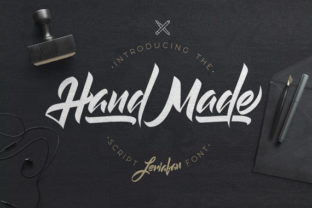
Leviafan: A Hand-Lettered Typeface for Modern Web Design
I was deep in the wireframing phase of a boutique coaching website last week, staring at a hero section that felt technically correct but emotionally flat. The layout had plenty of white space, the call-to-action button was positioned perfectly, yet the headline lacked the human touch the client wanted to convey. That is when I decided to swap out the standard sans serif placeholder for Leviafan, a Script Handwritten typeface that immediately changed the temperature of the design. As one of the many Fonts available to digital creators today, Leviafan stands out because it bridges the gap between casual handwriting and professional typography, making it an ideal choice for brands that need to feel approachable yet polished.
Using Leviafan to Humanize Digital Brand Identities
When integrating Leviafan into a new project, the first thing you notice is how this Script Handwritten style injects personality without sacrificing legibility. In the world of web design, we often struggle to make digital interfaces feel warm; screens are inherently cold, glass-and-light environments. By choosing Fonts like Leviafan, which was created by Kavoon with a distinct hand-lettered aesthetic, we can simulate the feeling of a personal note or a signed contract. I tested this on the coaching site by replacing the generic "Welcome" header with a custom greeting in Leviafan. The result was instant trust; the visitor feels as though they are being addressed by a real person rather than a corporation. This specific font style works exceptionally well for industries where the founder is the brand, such as life coaching, artisanal crafts, or creative consulting.
Optimizing Hero Sections with Script Handwritten Typography
The hero section is the most valuable real estate on any landing page, and Leviafan excels here as a primary display element. Because it is a Script Handwritten type, it naturally draws the eye, creating a strong visual hierarchy that guides the user toward the main value proposition. When working with Fonts of this nature, it is crucial to manage scale; I found that increasing the font size slightly beyond standard body copy allows the unique loops and strokes of Leviafan to breathe. On mobile devices, where screen real estate is limited, this font remains readable provided you maintain adequate line height. I avoided using it for long paragraphs, sticking instead to short, punchy headlines that promise a transformation or introduce a unique product. This approach ensures that the decorative nature of the script enhances the message rather than distracting from it.
Pairing Leviafan with Clean Sans Serif Fonts for Readability
A common mistake designers make when selecting Leviafan is trying to pair it with another decorative typeface, which creates visual noise. Since Leviafan is a detailed Script Handwritten font, it demands a neutral partner to balance the composition. In my recent project, I paired it with a geometric sans serif for all body copy and navigation elements. This combination of Fonts creates a sophisticated contrast: the organic flow of Leviafan handles the emotional heavy lifting, while the structured sans serif ensures that terms of service, feature lists, and blog content remain easy to scan. This duality is essential for maintaining professional credibility. If you use a script font for everything, the site feels messy; if you use it only for accents and headers, it feels curated. The key is to let Leviafan shine in isolation against a clean background or simple imagery.
Enhancing Call-to-Action Buttons and Conversion Elements
Beyond headers, Leviafan can be a powerful tool for optimizing call-to-action (CTA) buttons on sales pages and product launches. While traditional UI wisdom suggests using bold, uppercase sans serifs for buttons, testing Script Handwritten styles like Leviafan on "Buy Now" or "Join Us" buttons can significantly increase click-through rates for certain niches. It makes the action feel less like a transaction and more like an invitation. However, when using Fonts in this context, readability is paramount. I ensured the button background offered high contrast, perhaps a dark charcoal or a soft pastel, so the white or light-colored script popped clearly. This technique works wonders for course sales pages or webinar sign-ups where the goal is to build a personal connection before the user even commits. Just ensure the text is short; complex sentences do not belong inside a button, especially when rendered in a flowing script.
Implementing Leviafan in Responsive Mobile Layouts
Testing Leviafan across different viewports revealed how versatile this Script Handwritten asset truly is for responsive design. One of the challenges with script Fonts is that intricate details can blur on low-resolution screens or when scaled down too far. To mitigate this, I adjusted the viewport units in the CSS, ensuring that the font size scaled fluidly rather than hitting hard breakpoints that might make the text look jagged. On mobile, Leviafan serves as an excellent accent for section dividers or pull quotes within a blog post. It breaks up the monotony of scrolling text and gives the reader a visual resting point. For e-commerce sites selling handmade goods, using Leviafan for product names on collection pages adds a layer of authenticity that standard system fonts simply cannot match. It tells the customer that care went into every pixel of the site, just as care went into the product itself.
Selecting the Right License for Commercial Web Projects
Before finalizing any design, it is critical to verify the licensing terms associated with Leviafan and similar Script Handwritten assets. As a professional designer, I always check whether the font license covers desktop use, webfont embedding, and commercial applications. Using Fonts without the proper clearance can lead to legal issues for both the designer and the client. Leviafan, created by Kavoon, is designed for versatility, but confirming that your specific use case—whether it is a logo, a SaaS landing page, or a printed brochure—is covered is a necessary step. Once the legalities are settled, the technical implementation is straightforward. Most modern web platforms support variable fonts or standard WOFF2 formats, ensuring that Leviafan loads quickly and renders sharply across browsers. This attention to detail in both legal and technical realms ensures that the final brand experience is not only beautiful but also secure and professional.